
Signs of Corroded Pipes & How They Affect Water Flow
Signs of Corroded Pipes & How They Affect Water Flow
Quick Answer: Signs of corroded pipes appear when metal inside the plumbing system breaks down, creating rust, scale, and debris that restrict water flow. This corrosion gradually narrows pipe interiors, reduces pressure, contaminates water, and weakens pipe walls. Early detection helps prevent leaks, burst pipes, and costly structural damage. Understanding how corrosion affects water movement allows homeowners to act before minor flow issues turn into major plumbing failures.
How Corrosion Disrupts Water Pressure Throughout a Home
Pipe corrosion reduces water pressure by shrinking internal pipe diameter and releasing debris that interferes with smooth water movement.
One of the earliest performance-related signs of corroded pipes is a noticeable pressure decline across multiple fixtures. Homeowners often experience this as inconsistent flow or a gradual loss of force while showering or filling sinks. In many cases, people first notice signs of low water pressure in the house, and later discover that the underlying low water pressure corroded pipes cause internal rust and scale buildup.
As corrosion progresses, corroded water pipes develop rough internal surfaces. Water moving through these surfaces becomes turbulent, reducing usable flow even when municipal supply pressure remains stable. This is why pressure loss caused by corrosion often feels worse during peak usage times.
What Happens Inside a Corroding Pipe
Corrosion changes pipe interiors by introducing rust, pitting, and mineral buildup that restrict water flow and weaken structural integrity.
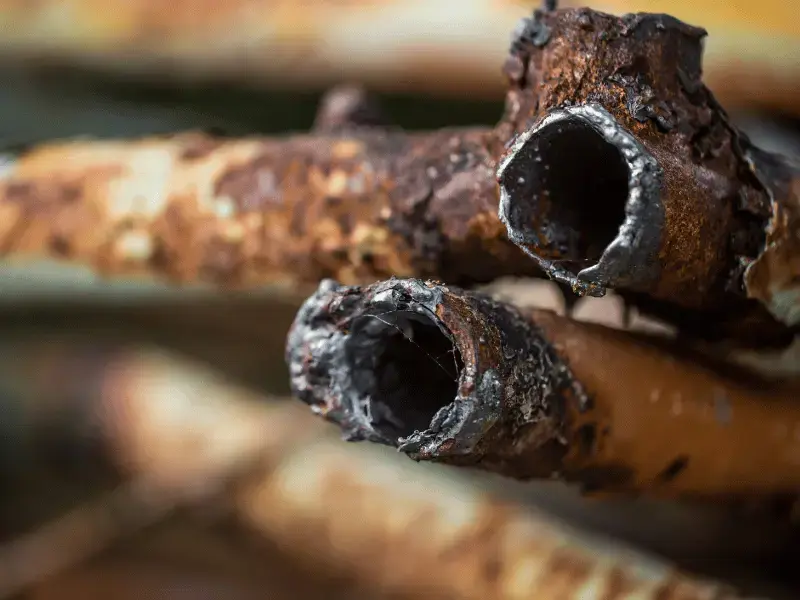
At a chemical level, corrosion begins with oxidation, where metal reacts with water and oxygen. Over time, this reaction produces rust and other by products that cling to pipe walls. These materials create surface discoloration and rust stains that may eventually appear at fixtures.
Inside the pipe, corrosion may take several forms:
- internal corrosion that narrows the passageway
- localized corrosion that forms weak points
- pitting corrosion that eats into metal in small areas
These processes generate corrosion debris, which can travel downstream and lodge in valves, aerators, or appliance inlets causing recurring plumbing issues.
Common Visible Signs of Corroded Pipes
Visual changes often provide the clearest early warnings of corrosion before major leaks occur.
Here are some of the most reliable outward indicators homeowners notice:
- visible rust on exposed piping in basements or utility rooms
- red/brown/green stains around joints or fittings
- flaking/bubbling/blistering coatings on pipe surfaces
- pitting or pinholes that indicate metal thinning
When protective layers fail, moisture can reach bare metal, accelerating damage. A breach in protective barrier allows corrosion to spread rapidly, especially in humid or poorly ventilated spaces.
How Corrosion Affects Water Quality and Safety
Corrosion directly affects water color, taste, and odor by allowing metals to leach into the supply.
One of the clearest signs of corroded pipes is discolored water, including rusty/brown water or blue-green water (copper). These color changes often appear after water sits in pipes overnight.
Additional water-quality symptoms include:
- metallic taste / metallic smell
- cloudy appearance
- sediment settling in sinks or tubs
In severe cases, corrosion can contribute to lead contamination / heavy metals, especially in older systems. These conditions may raise concerns about signs of copper poisoning from water pipes, particularly when copper corrosion is advanced.
Reduced Flow, Pressure Drops, and Blockages
Corroded pipes restrict flow by narrowing internal diameter and trapping debris that causes clogs.
As corrosion advances, homeowners frequently report:
- reduced water pressure
- unexplained drops in pressure
- flow rates decline without obvious leaks
Rust and mineral buildup create restricted water flow, leading to frequent pipe clogs and recurring drain issues. Over time, these restrictions can progress into full blockage / clogged pipes, making everyday tasks difficult.
Are Corroded Pipes Dangerous?
Yes, corroded pipes are dangerous because they can leak, burst, contaminate water, and damage structures without warning.
A severely corroding pipe loses strength as metal thins. This makes it vulnerable to sudden failure, especially under pressure or temperature changes. Risks include:
- water leaks inside walls
- wet spots on walls/ceilings/floors
- mold growth and rot
- costly emergency repairs
Homes with bad plumbing pipes are also more likely to suffer insurance claims due to hidden water damage.
Long-Term Damage Caused by Pipe Corrosion
Pipe corrosion causes long-term damage by weakening pipe walls, restricting water flow, and increasing the risk of leaks, contamination, and sudden failure.
As corrosion progresses, rust and mineral deposits continue to narrow the pipe’s internal diameter while simultaneously reducing structural strength. Over time, the adverse effects of corrosion include chronic low pressure, recurring leaks inside walls, water quality degradation, and a higher likelihood of burst pipes that can cause extensive property damage.
Diagnosing Corrosion Before Pipes Fail
Early diagnosis combines visual inspection with professional testing to identify corrosion depth and location.
Professionals may use:
- ultrasonic thickness testing / video inspection
- moisture meters for damp insulation
- pressure and flow testing
If corrosion is suspected in buried or inaccessible lines, consulting a reliable waterline expert can help determine whether repair or replacement is the safest option.
How to Fix Corroded Pipes?
Fixing corroded pipes depends on severity, location, and pipe material.
Minor issues may be addressed temporarily, but widespread corrosion often requires long-term solutions. Common corroded pipe solutions include:
- Cleaning and flushing to remove loose debris
- Epoxy lining to seal internal surfaces
- Sectional replacement of severely damaged pipe
- Trenchless rehabilitation for long runs
When corrosion affects long sections, many homeowners turn to a 24/7 residential pipe lining company to restore flow without excavation.
Corrosion Prevention Tips for Homeowners
Preventing corrosion focuses on controlling moisture, water chemistry, and pipe exposure.
Helpful preventive steps:
- Insulate pipes to reduce condensation
- Address water acidity and hardness
- Replace aging rusted water pipe sections proactively
- Monitor pressure and flow changes
Scheduling periodic evaluations with the best plumbing company helps catch corrosion before leaks develop.
Get Expert Help Before Corrosion Becomes a Failure
If you’re seeing ongoing signs of corroded pipes, professional evaluation prevents surprise leaks and water damage.
📞 Call Sewer Solutions NW
📱 (253) 271-6843
Our team specializes in diagnosing corrosion-related pipe problems and restoring reliable water flow before emergencies strike.
FAQs About Signs of Corroded Pipes
1. What are the earliest signs of corroded pipes?
Discolored water, metallic taste, pressure loss, and visible rust on exposed pipes.
2. Can corroded pipes cause low water pressure?
Yes. Corrosion narrows pipes internally, restricting flow and lowering pressure.
3. Are corroded copper pipes dangerous?
They can be, especially if corrosion leads to copper leaching or pinhole leaks.
4. Do corroded pipes always need replacement?
Not always. Some cases can be stabilized with lining or sectional repair.